Homestead's August Has Two Calendars Running at Once
"We want the water, not the fines." That's how Eagle River Water and Sanitation District general manager and CEO Siri Roman explained the valley's harshest watering rules in years, and if you live in Homestead, you've felt the tension behind that line every time you've walked past a lawn that used to be green and now isn't. Meanwhile, the Homestead Court Club is running its calendar like nothing has changed at all: fall tennis registration is open, the End of Summer Party is on the books, and the pickleball court now runs on a strict reservation system just to keep the peace with the neighbors nearby. Homestead this August is really two calendars overlapping, one set by the club and one set by the water district, and they are not telling the same story about what this season is supposed to look like.
Walk into the Court Club at 400 Homestead Drive any weekday before 6 a.m. and you'll find the doors already open. The club runs Monday through Friday from 5:55 a.m. to 10 p.m. and weekends from 6:30 a.m. to 10 p.m., with a staff that residents actually know by name: general manager Tracy Erickson, tennis director Eric Meyer, programming director Kim Baugh, fitness director Sophie Watras, and children's programming director Jillian Labbe.
Fall Junior Tennis Session 1 opens August 17 and runs through October 9, with no programs on Monday, September 7 for the holiday. That's a week out from today. If your kid played over the summer, registration is the thing to handle this week, not next.
The other fixture on the calendar is the End of Summer Party and BBQ, the neighborhood's unofficial close to the season. Last year's version ran from 4 to 7 p.m. with live music, jumpy houses, face painting, and a mechanical bull, the kind of afternoon that turns a parking lot into a block party. Watch the HOA's newsletter for this year's exact date, but the shape of the day is reliably the same.
None of this reads like a neighborhood in crisis. That's the point. The club side of Homestead operates on its own rhythm, built years in advance, indifferent to what's happening upstream.
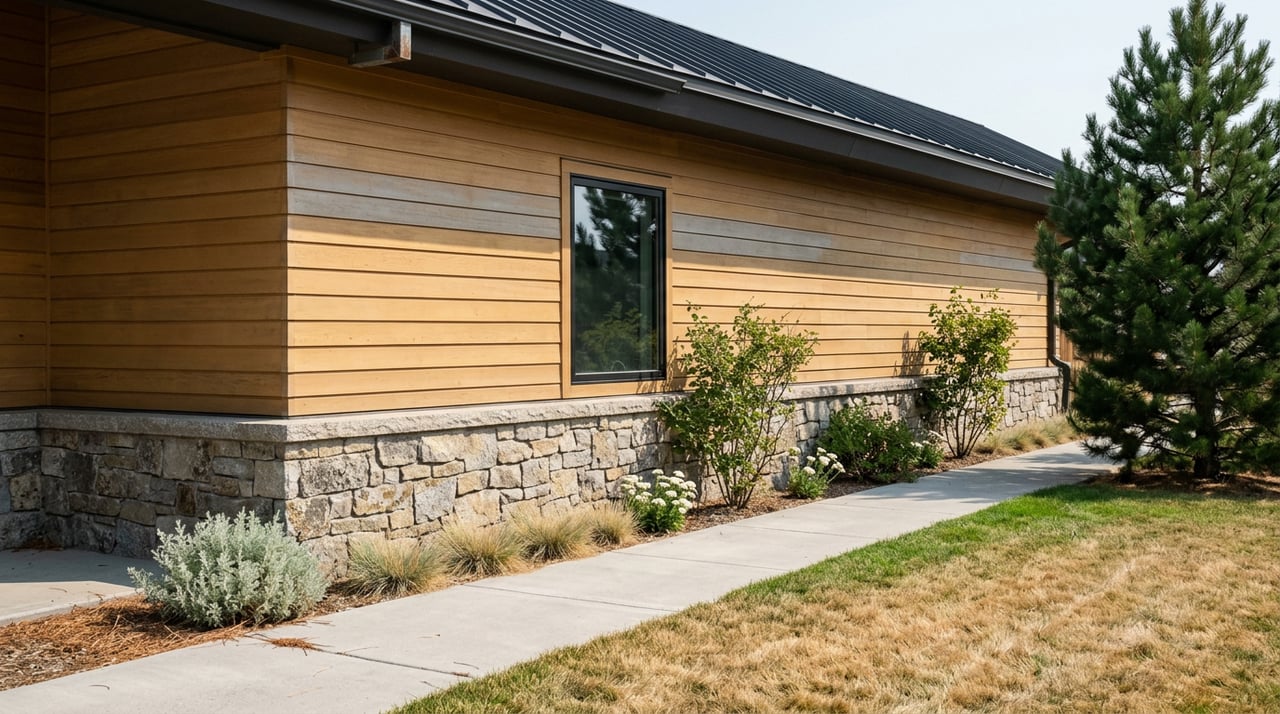
What's happening upstream is a drought that the Eagle River Water and Sanitation District has called historic. On April 9, 2026, the district's board declared a Water Shortage and moved directly into Stage III restrictions under its Water Shortage Response Plan, after snowpack measured just 3.9 inches as of April 1, about a quarter of the minimum level the district typically counts on for summer supply. That declaration didn't ease in gradually. The new watering schedule took effect immediately.
Here's what Stage III actually means for a Homestead address this summer:
That last point carries more weight than it sounds like at first. Tier 4 and Tier 5 customers make up just 14 percent of the district's residential accounts, but they account for 45 percent of all residential water use. The district isn't asking every household to cut back by the same amount. It's asking the heaviest users, the biggest lawns, the largest irrigated lots, to absorb most of the reduction. In a neighborhood built from a mix of single-family homes, townhomes, and multi-family units, that math lands differently depending on how much yard you're responsible for.
Roman's framing, that the district wants conservation rather than penalty revenue, is worth taking at face value. The fines exist to change behavior, not to fund the district. But behavior is exactly what's visible on every street in Homestead right now: brown patches where there used to be green, sprinklers running at hours nobody used to think about, and a collective adjustment to what a "normal" yard looks like in a year with the worst snowpack on record.
Water isn't the only shared resource getting renegotiated this summer. The pickleball and basketball court behind the Court Club has become popular enough that the HOA had to write an entirely new rulebook for it, and the rules tell you a lot about how tight the geography here actually is.
The court sits close to homes, and noise and parking had become recurring items at board meetings. So the HOA introduced a formal system: the court is for Homestead members only, every session requires a reservation and check-in at the club's front desk, play is capped at 90 minutes per day, and players must use the club's loaner equipment rather than bring their own. Play is allowed from 9 a.m. until dusk, with no music, no alcohol, and no parking in the Homestead Meadows lot. The area is under video surveillance, and violating the policy means losing reservation privileges.
None of that reads like paranoia. It reads like a board trying to keep a genuinely good amenity from becoming a genuine nuisance for the handful of homes closest to it. That's the tradeoff of an amenity-dense neighborhood built on 760 acres with roughly 835 residences: when something works too well, the fix has to work for everyone at once, because there's no separate, quieter court to send the overflow to.
The same logic is playing out at Lower Homestead Park, the playground and fields on Edwards Village Boulevard. The HOA's recent newsletter cycle included a notice titled "Lower Homestead Park Changes, We Need Your Input," an open invitation for residents to weigh in before anything gets finalized. It's a small item in a monthly newsletter, but it's also a reminder that in a single-HOA neighborhood, the shared spaces aren't fixed. They get revisited, and the people revisiting them are your neighbors on the board, working from feedback residents actually send in.
The drought that's driving the water restrictions is also why Eagle Valley Wildland's free chipping program landed in the same May newsletter that announced the pickleball court reopening and the district's water shortage message. Slash removal and defensible space work matter more in a year when the snowpack came in at a quarter of normal and the district is asking people to let lawns go dormant rather than fight to keep them green. It's a small program, but its timing isn't a coincidence. It's the same dry year showing up in a different department's inbox.
None of these threads, the tennis calendar, the water restrictions, the pickleball rules, the park survey, are separate stories. They're the same story from different angles: Homestead is a neighborhood where the shared systems, one club, one HOA, one water district, mean that when circumstances shift, they shift for everyone on the same week, not gradually across scattered private decisions. That's the tradeoff for the convenience of having tennis, fitness classes, and a pool all built into your HOA dues instead of scattered across a dozen private gyms and clubs around the valley. This particular August, it means quieter courts, thirstier lawns, and a park that might look different by next summer based on what residents say now.
If you're already living this rhythm and have questions about how any of these changes touch your specific property, whether it's a watering schedule tied to your address or what the park changes might mean for a lot near Lower Homestead, Brooke Gagnon has spent her career inside these Eagle County neighborhoods and is glad to talk through what you're seeing on your own street.

Her vast knowledge of the area coupled with her international experience allows her to assist all local, second homeowner and international clientele alike. Contact her today!

56 Edwards Village Blvd #214 Edwards CO 81632