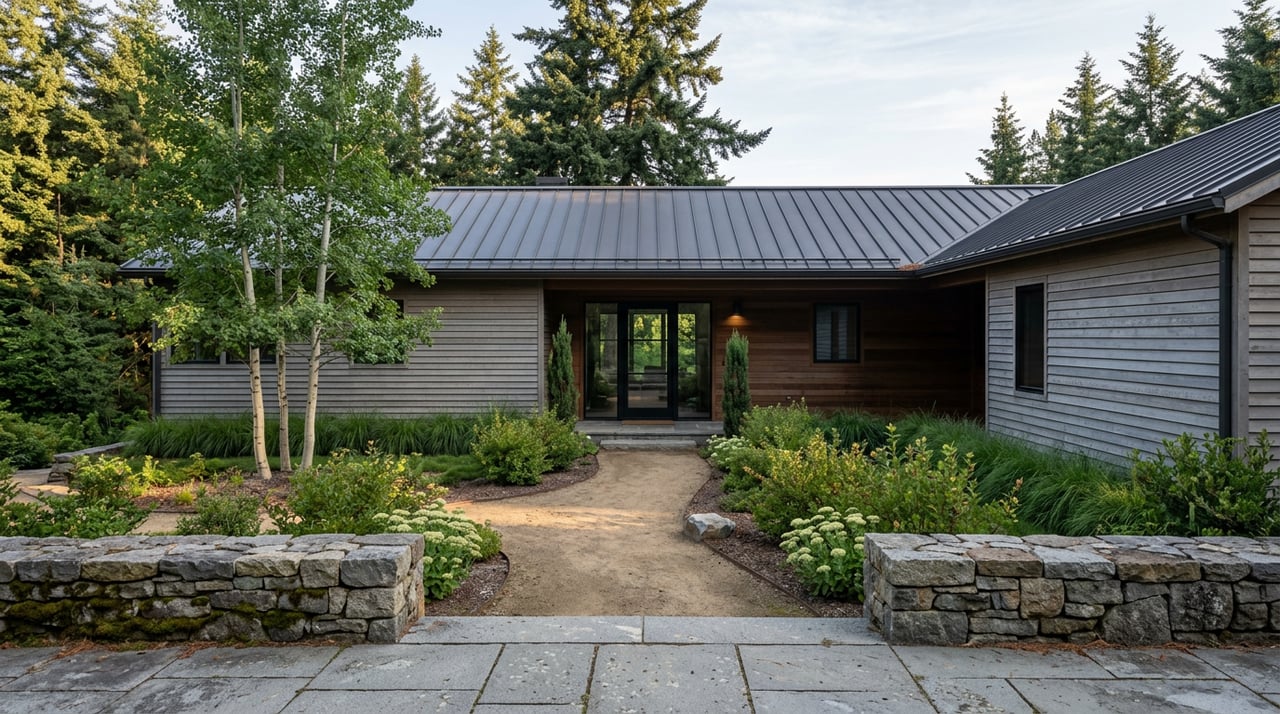
Edwards Isn't Turning Over. It's Being Handed Off.
The sign above the patio at Riverwalk still faces the same stretch of the Eagle River it always has. The Vail Daily reported that Etown had occupied the Riverwalk space for nearly twenty years before CAYA opened this August. If you only glance at the facade, this looks like the same story that plays out in every resort town: a longtime restaurant closes, a new operator takes the lease, the neighborhood loses a little of what made it familiar.
That is not what happened here. And once you notice the pattern, you start seeing it everywhere else in Edwards this fall too.
CAYA's owner, JD Childress, didn't discover the Etown space through a commercial listing. He and his family moved to the Vail Valley in late 2019 with the idea of opening a restaurant already forming, then watched those plans stall when the pandemic hit. They waited. In January 2025, when the original Etown owners were ready to sell after running the restaurant for close to two decades, Childress bought it. He sat on the space for about a year and a half before opening CAYA this August, adding lunch service starting August 3 and booking live music for Fridays, Saturdays and Sundays through September.
That gap matters. The year and a half between the purchase and opening made this a gradual transition, not a quick turnover.
"We want the community feel to remain." — JD Childress, quoted by the Vail Daily
That goal tracks with how he talks about the concept itself: come in after fishing the river, after a day on the mountain, after a wedding, no need to change first. The menu is built around what he calls globally inspired elevated bar food, rustic rather than fussy, which suggests he's aiming to keep the casual, drop-in energy that made the old space a fixture rather than reinventing it as something the neighborhood has to dress up for.
A few blocks away, The Bookworm of Edwards just went through its own version of this handoff. The Vail Daily reported that the store has operated in Eagle County for 28 years, starting as a mobile book van under Kathy Westover and Neda Jansen before Kristi Allio and Nicole Magistro moved it into its current Riverwalk storefront and added the cafe. Matt Lee bought it in 2020 and steered it through a genuinely hard stretch for independent booksellers, expanding the team and improving pay along the way. This year, Lee handed ownership to Christopher Green.
Green isn't an outside buyer either. He started as a part-time employee at The Bookworm in 2011, after working a summer camp job in the valley, and spent many years there before taking over as owner.
"In the Bookworm, I have found friends, community, a life, and livelihood." — Christopher Green, quoted by the Vail Daily
Two familiar Edwards businesses have had recent ownership changes: JD Childress bought Etown in January 2025 before opening CAYA this August, while Christopher Green became The Bookworm's owner after many years working there. That's not a coincidence worth shrugging off. It's a pattern.
The same logic shows up a level higher, in who owns the real estate itself. The Vail Daily reported that Denver-based Gart Properties acquired Edwards Corner, the retail hub home to tenants like Hovey & Harrison, Drunken Goat, Cut Butcher Shop and Eye Pieces of Vail; the company's executive vice president pointed to a 2% vacancy rate and limited new construction as reasons for the investment, framing it as a bet on the resilience of Colorado's mountain communities.
A 2% vacancy rate in a retail corridor isn't the number you'd expect if tenants were cycling out and sitting empty while a landlord searched for replacements. It's the number you get when spaces get filled again almost as fast as they turn over, often by someone who already knows the business or the building. Gart's own fund strategy backs this up: the company is explicitly targeting long-term ownership of stabilized, well-tenanted properties rather than turnaround plays. Edwards Corner fit that description before the ink dried.
Even the parts of Edwards that run on a schedule rather than a lease are following this same rhythm of orderly handoff rather than abrupt ending.
The Edwards Corner Farmers Market, a Saturday tradition for more than fifteen years, wraps its 2026 season on September 19. As of today, that leaves three more Saturday mornings, September 5, 12 and 19, before the more than 30 vendors who set up in the West Plaza pack it in for the year.
The Hillcrest roundabout project, which has spent the summer adding landscaping and a new entrance sign near the intersection, is scheduled to finish on September 18, the same week the market closes out. Two different projects on two completely different tracks are set to conclude within a day of each other, and neither one is disappearing. The roundabout gets its finished landscaping. The market comes back next June. What's ending is the summer version of Edwards, not the institutions that define it.
October brings Pumpkinfest, the next event already on the town's calendar: pumpkin painting, a bounce castle, trick-or-treating and yard games a short walk from Riverwalk. The programming doesn't stop when summer does. It changes shape and keeps going, which is the same thing happening at the restaurant and the bookstore a few blocks away.
Put these threads together and the picture that emerges isn't a town in flux. It's a town where recent transitions have involved people with different kinds of ties: CAYA's owner had been planning a restaurant in the valley, and The Bookworm's new owner worked there for many years. Rather than outside chains moving in on distressed spaces, these examples point to continuity through different kinds of ties to the valley and its businesses.
If you're a longtime Edwards resident, this is worth knowing because it changes what you should expect from turnover here. When a familiar sign changes, the more likely outcome based on these recent examples is continuity with a new name attached, not a wholesale replacement of what made the spot worth visiting. Give CAYA a try during its Friday, Saturday or Sunday live music nights this September, or stop by lunch, now running daily since early August. Say hello to Christopher Green next time you're in The Bookworm picking up something for the kids. Get to the farmers market on one of the three remaining Saturdays before it closes for the season. Together, they show familiar parts of Edwards carrying on through ownership changes and the turn of the season.
If you're weighing whether Edwards is the kind of place where a home purchase holds its character over time, that's exactly the signal worth watching. The Bookworm handoff involved a longtime employee, while CAYA's owner had been planning a restaurant in the valley for years; together, these examples suggest continuity, not just traffic.
Whether you're already settled in Edwards or thinking about what it would take to plant roots here, Bloom Group Vail can walk you through what's changing on the ground and what it means for property values in this corner of the valley. Request a market consultation to talk specifics.

Her vast knowledge of the area coupled with her international experience allows her to assist all local, second homeowner and international clientele alike. Contact her today!
56 Edwards Village Blvd #214 Edwards CO 81632